 caprospace
I. A Late Arcade
For most of my early childhood, I was able to experience games only vicariously or in short non-repeatable sessions.
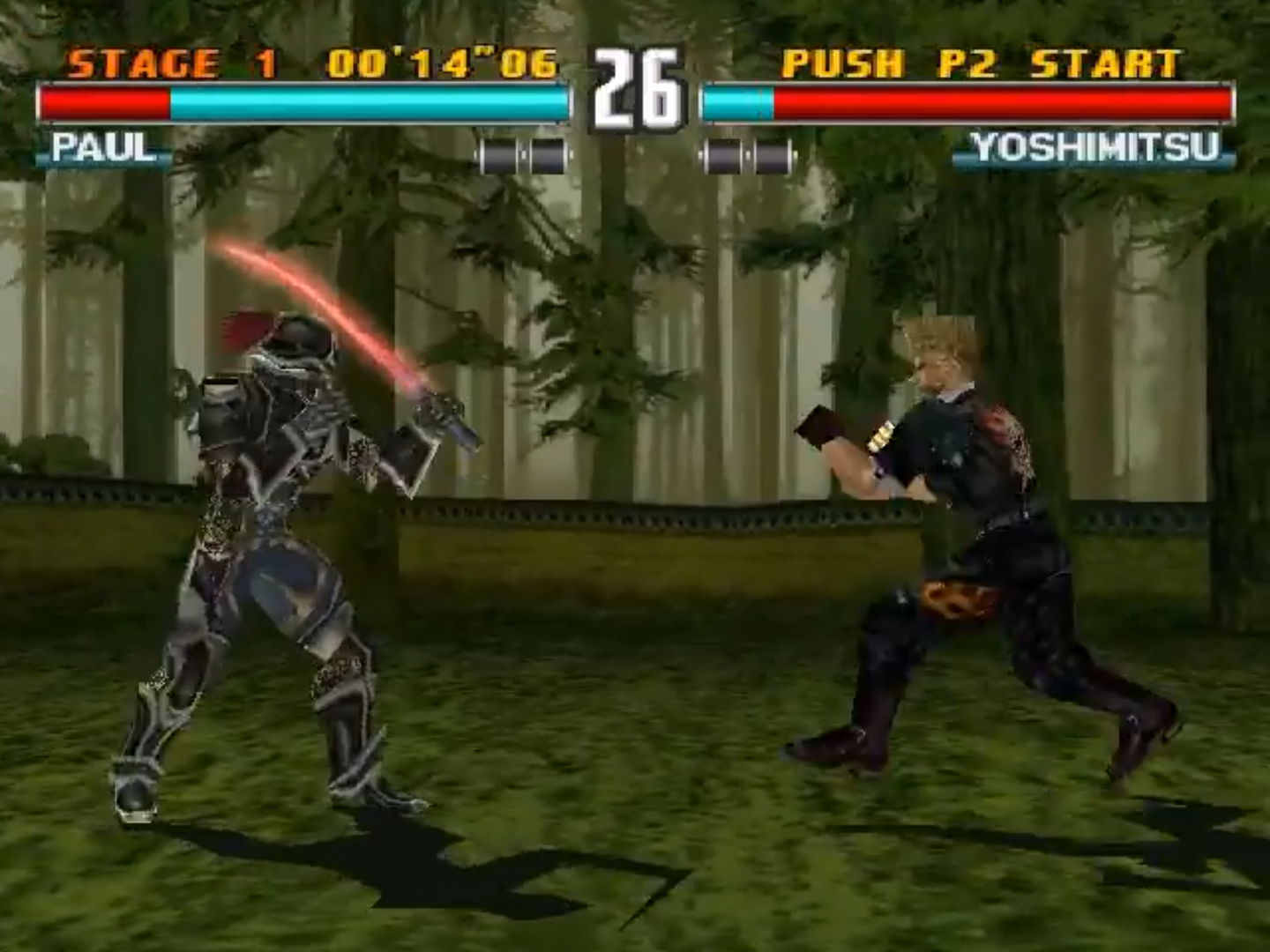
At the time, there was just one establishment in my hometown that could be called a shopping mall and there you could find a PlayStation set up for game demonstration. It typically had one game that you could freely play and it was usually swapped out once every few months. There was always a small crowd of kids gathered in front of the console, taking turns playing, while their parents proceeded to shop for groceries without the added annoyance of their children’s exuberance.
I remember playing single matches of Tekken 3, doing my best to play decently while at the same time trying to figure out the controls, occasionally coached by a more savvy kid. I was never able to play long enough to enter a competitive mindset; I was just happy to be able to share the experience alongside everyone else: how well I understood the game or how good I actually was at playing were of little or no concern to me. Sometimes, just watching others play was more than enough fun and I didn’t take up a single match.
Tekken 3 was so popular among the kids visiting the store that they didn’t swap it out for more than a year. Other games that got into the rotation that I remember fondly are Soulcalibur, Spyro and Dead or Alive 3.
II. Judge a Book
Other times, since the demo console was set up in a section of the store that hosted video games for sale, I remember spending time scrutinizing game boxes for consoles I did not own, being enthralled by the cover and inspired by the blurbs on the back. Little did I know that, for many of the games on display, the act of inspecting their packaging was the most enjoyable part of the experience and that I would quickly lose interest, if I were to ever buy them.
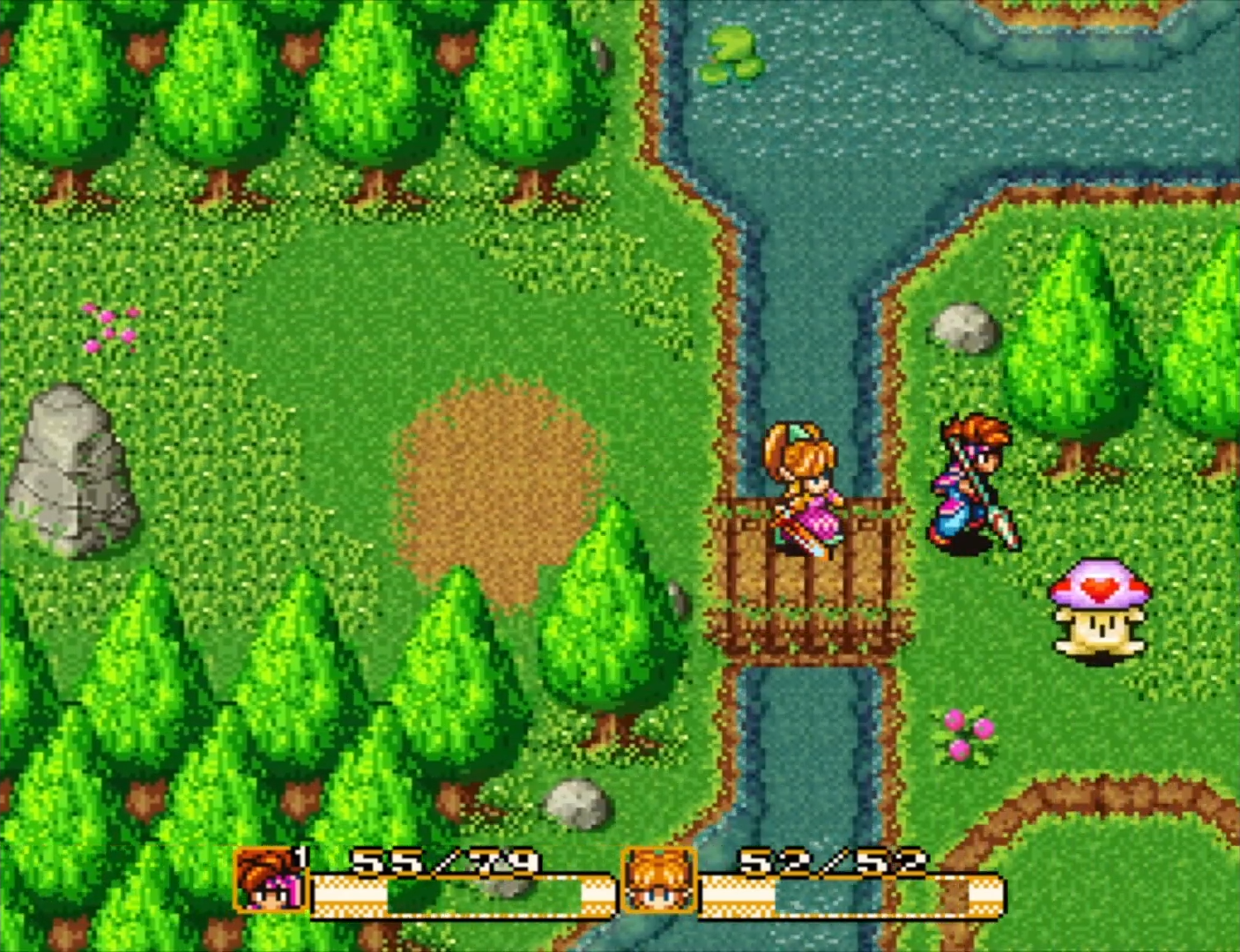
While the history behind its making is fascinating, I feel that Secret of Mana is a game that doesn’t really stand the test of time: gameplay-wise, it is just a clumsy stab at what action-RPGs would become in the years to follow; story-wise, it is quite silly and incoherent. What really makes it memorable is the general presentation: it certainly was a great technological achievement for its time and it’s extremely charming when experienced through screenshots and short clips.
What has always struck me most about Secret of Mana, though, is something else, something that has nothing to do with the game proper, but it’s fundamental in defining its presentation: I’m talking about its cover art.
I think I am not alone in my fancy, and for good reasons: said cover is the work of landscape painter Hiroo Isono; as a quick web search will reveal, his paintings are extraordinary, many even more poignant than the one used in Secret of Mana, which, at a glance, is able to communicate the beauty, immensity and mystery of nature.
I only played Secret of Mana a couple of years ago: for most of my life, I assumed it to be a very good game, just because its cover was so indelibly burnt into my brain. When I finally came around to play it, I clearly saw its shortcomings and decided I was not interested in persisting till game completion, abandoning it midway.
But what’s really surprising is that this experience didn’t diminish one bit the respect and reverence I have for the “imagined” Secret of Mana: in my mind, the game I played is not the “real thing”, I just stumbled upon a namesake. The “true” Secret of Mana still exists somewhere, majestic and unattainable; if I could ever find it, playing it in all of its glory would reveal itself to be the greatest gaming experience of my entire life.
III. A Cryptic Contraption
During the holidays, my family and I used to invariably visit my grandparents, who lived quite far from us. They ran a small business and had a computer for work-related purposes. It was a DOS machine, already old at the time, but they had a few games and so to me it quickly became a source of wonders.
I would get someone to help me insert floppy disks and then I’d lose myself in the strange colours of cryptic worlds. Most games had no instructions and, even if they did, I was still unable to read, much less so in English, so they wouldn’t have helped anyway. I remember making little to no progress in any of the games, but I clearly felt that the onus was on me: they most definitely had more to offer, I just wasn’t able to figure out how to get it.
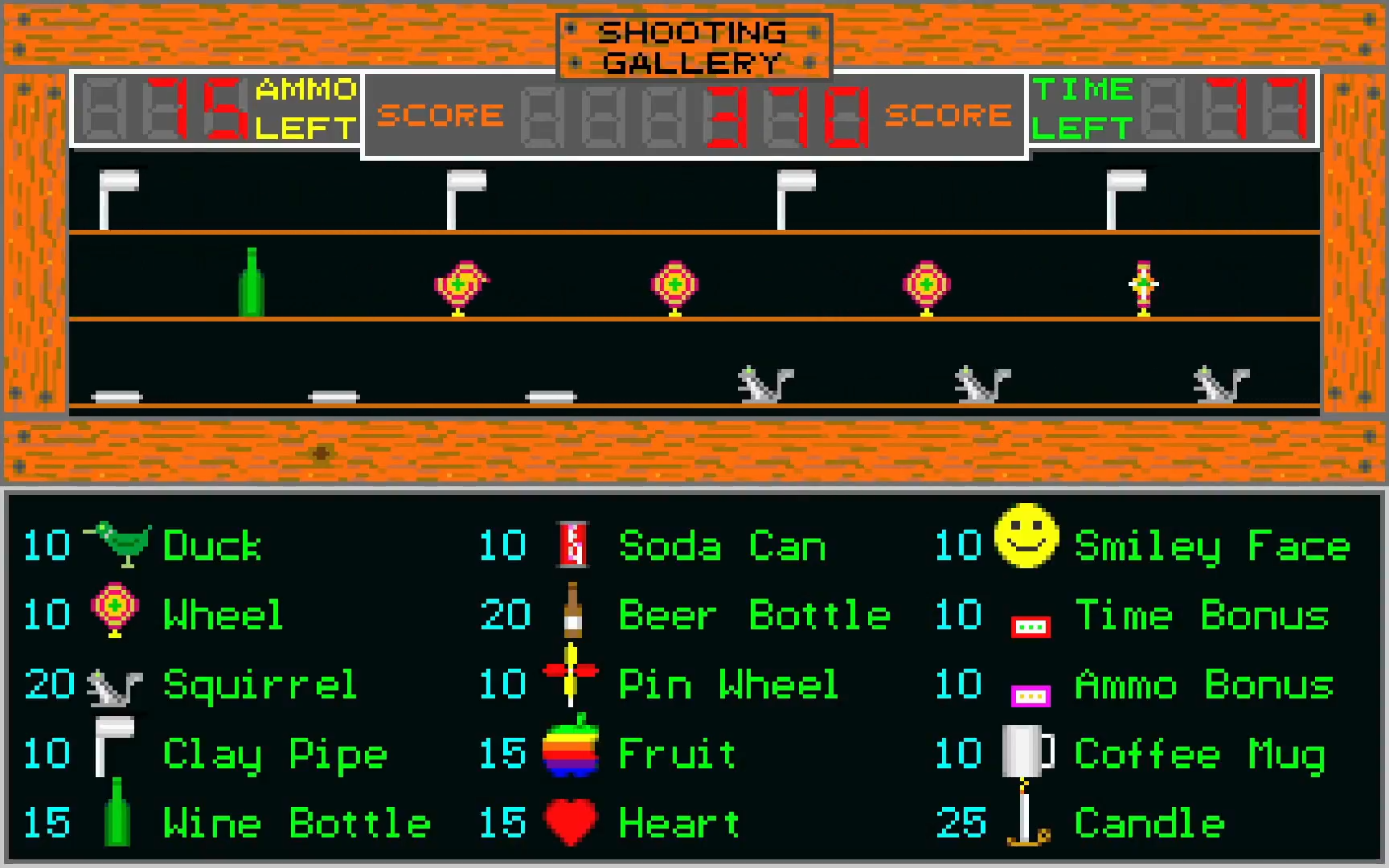
Some of the games I had at my disposal were Donald Duck’s Playground, which had cool visuals and diverse minigames all accessible right from the start, but of which I was never able to understand anything at all, and Bumpy’s Arcade Fantasy, in which I was able to progress for a few levels, even though it took me the longest time to figure out the controls because the gameplay was way more methodical than the presentation led you to believe. But, by far, my favourite was Shooting Gallery, whose gameplay and visuals were simple and intuitive enough for a four-year-old to quickly grasp.
Before writing the previous paragraph I actually had no idea whatsoever what the titles of these games were, but I was able to find them pretty quickly, given how vividly I remember them even after so many years.
IV. Little Creatures by the Sea
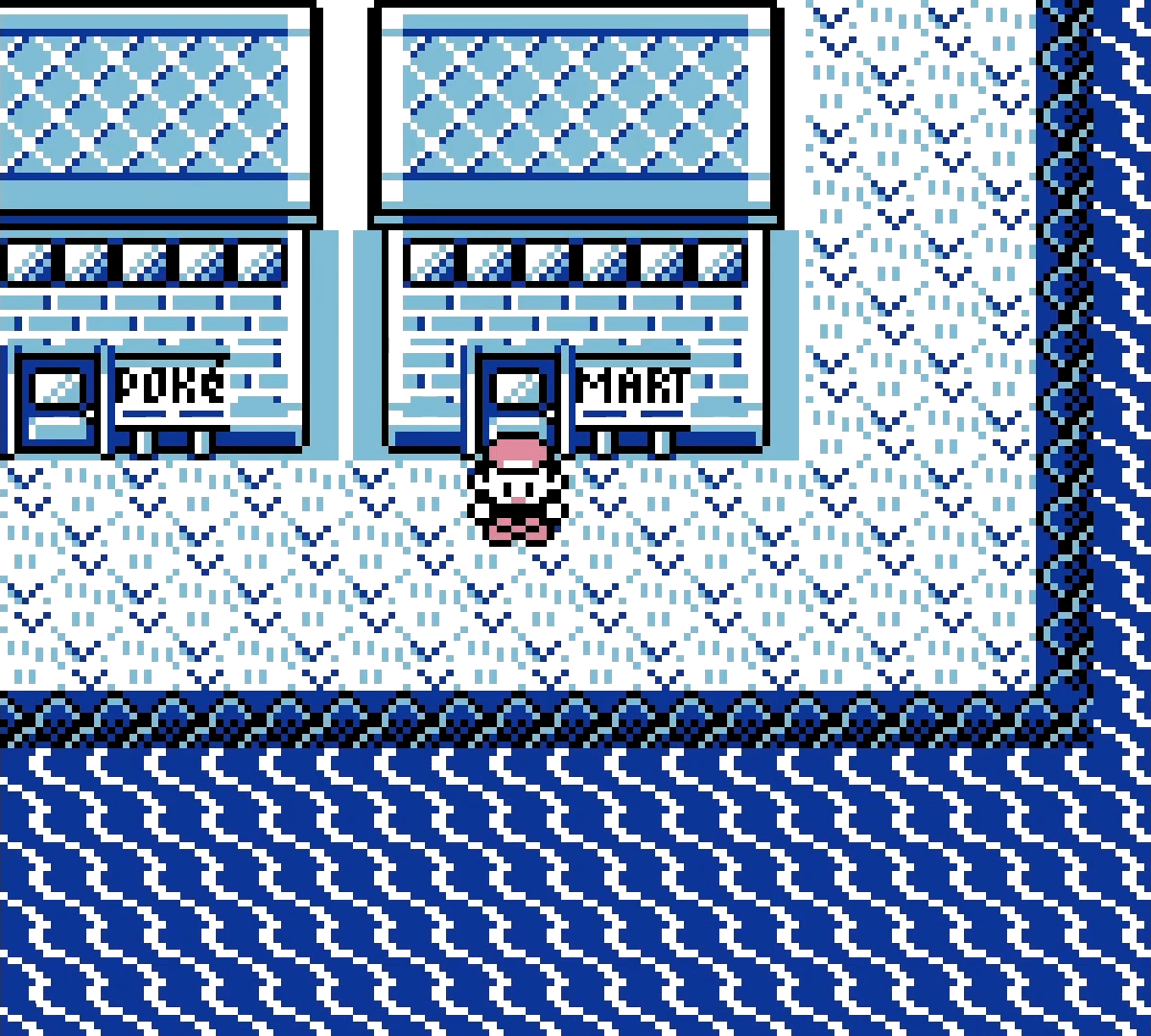
At five, I completely lost my mind to Pokémon: I zealously watched the anime every day on television, completed the collectible sticker album and spent long hours drawing hundreds of Pikachus, but the sweetest fruit of the entire tree was completely out of my reach: I couldn’t play the Pokémon games. I didn’t have a Game Boy and my parents were reasonably against making their young child the drooling slave of an electronic device. And so, I had to settle for watching other people play.
Once we were by the seaside for a short holiday and I remember being glued for many hours to this girl, slightly older than me, playing Pokémon Blue in a playground on the sand. Curiously matching our condition of that time, inside the game she was also in a city by the water, using Surf and fighting aquatic Pokémon.
Even though there were other kids around us, cheerfully playing more suitable games for a sunny day on the beach, we were both enthralled, hypnotised by this computer world of black dots and blips, so similar and yet so unlike our own.
I vaguely remember her asking me if I wanted to play for a bit, but I can’t recall my answer: I don’t know if, filled with shame and fear, I refused because I was still unable to read properly on my own or if, trembling with desire, I rose to meet the challenge and tried a few fights under her guidance.
V. Less Than the Sum of Its Parts
A year or two later, the DOS computer at my grandparents’ house was swapped out for a Windows 95 machine, introducing me to another phase in my relationship with video games. This new computer, being fancier, more colourful and more usable, thanks to its desktop environment, became even more alluring to me than the previous one.
What really struck me was one piece of software in particular: the demo for Sonic the Hedgehog. It contained only a couple of levels but, being very intuitive and responsive compared to the DOS games I was used to, it instantly got me hooked: I played it over and over again; I kept playing even when I got to the point of knowing it by heart.
Eventually, my dad, with whom I share a fascination for computers, bought a Windows 2000 machine, that was later updated to Windows XP and that remained for more than a decade the principal source of games in our house. For quite a few years, I felt intimidated by and incapable of playing an entire modern game on my own: I contented myself with watching my dad interact with those complex worlds, sometimes asking for explanations or offering advice.
I can’t quite piece together why I felt so belittled by long-form games in the first place, but I remember perceiving tackling them as a gargantuan task; they were sophisticated objects whose surface I could barely scratch. Certainly, at the time, playing an entire game without ever consulting a guide or a walkthrough seemed like an effort unlikely to succeed and multiple magazines existed that provided instructions alongside reviews, previews and “free games” CDs.
The free games were of two kinds and usually each magazine came with one CD for each type: full-length games, the same you would have bought in a store but at the magazine’s price, and compilation disks with demos for upcoming games sometimes intermixed with short flash games ripped from the web.
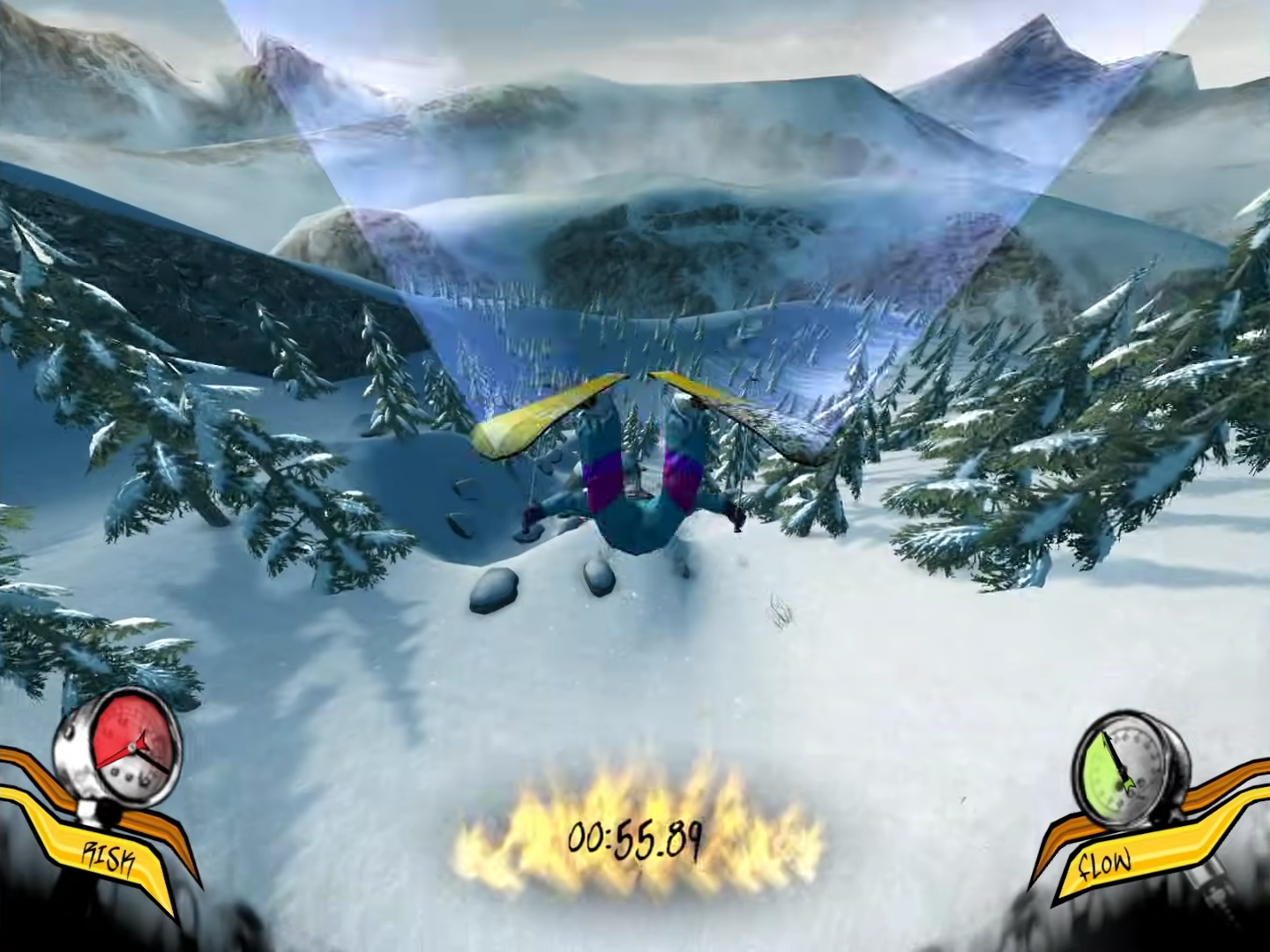
The concerns I had with long-form games didn’t seem to extend to their demos (maybe thanks to my previous experience with Sonic the Hedgehog), so I used to devour them all alongside flash games, irrespective of genre or format (although, I tiptoed around horror games and still do). I again grew fond of some of those short games and kept replaying them for weeks and months, unscathed by the fact that I had already “exhausted their content”: demos for FlatOut and Freak Out: Extreme Freeride or the very silly flash game Kindergarten Killer.
There is something magical, although very subtle, about games whose entire content can be experienced in half an hour. Demos in particular, compared to flash games, contained an implicit promise of more that was both quenched and rekindled by the act of replaying them. This would become especially evident to me when I eventually got around to play the full version of some of my favourite demos, with the most striking example certainly being Freak Out: I spent tens of hours on the first level contained in the demo, but I got tired of the full game in less than a couple.
VI. Of Light Reflected
During elementary school, I eventually persuaded my parents to gift me a Game Boy Advance, whose handheld nature, coupled with the fact that this device was exclusively my own and not a “family property”, made it less intimidating to me and allowed me to start tackling long-form games with relative ease.
While I greatly enjoyed and fondly remember my time with the GBA, my catalogue of games remained quite modest over the years (to this day, it amounts to 13 in total), which forced me to be very thoughtful and determined about any new title I wanted to add to it. I spent a lot of time scrutinizing boxes in the store I previously mentioned, assessing which game would be the best purchase. As fun and entertaining as it was, I was acutely aware that this process left something to be desired both in terms of effectiveness and efficiency, but fate would soon come to the rescue.
One of the games I was able to acquire through this method was “Legend of Zelda: A Link to the Past”, which to this day I dispassionately consider to be one of the greatest of all time. ALttP leaves ample room for players to explore its world at their own leisure, which is great, in theory, but to my young self all that freedom translated into a difficulty to progress steadily.
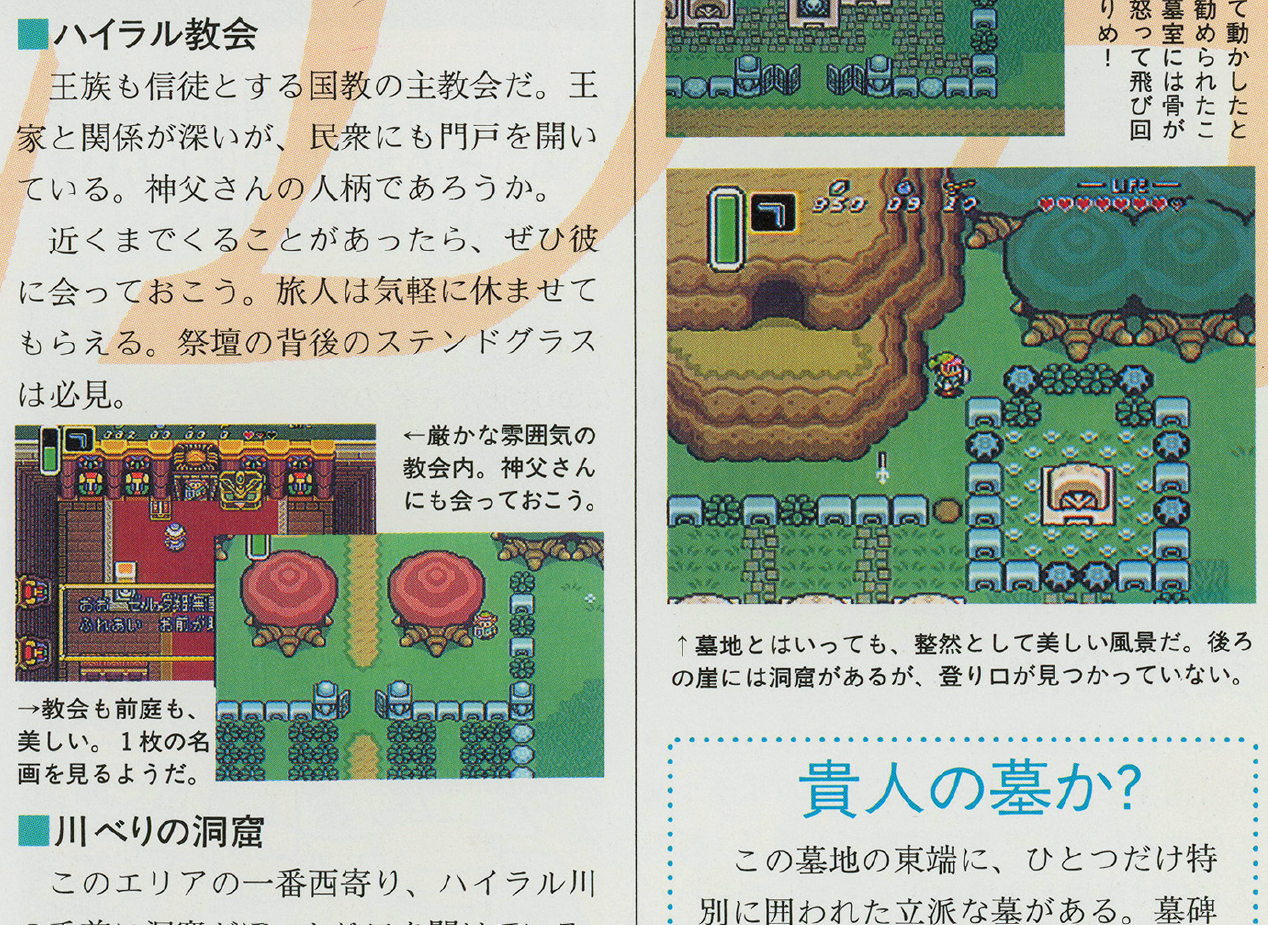
One day, walking past a kiosk, I saw the first issue of a magazine dedicated to the GBA, which boasted a full guide to ALttP within. Having managed to convince my mom of the utmost importance of such a document, I was able to have her purchase it for me and soon found I was not mistaken.
Reading through the guide, I was swept away by the sheer number of things I had missed during my playthrough: ALttP was full of secrets big and small. Despite me not noticing at the time, the most intriguing element was that, unlike an official guide which would have been very verbose and explicit in its directions, this one tried to pack as much information into as few pages as possible, a fact that led me to sometimes know the sequence of steps necessary to obtain a certain item, but still be puzzled by exactly how to execute them due to the economy of words.
While completing ALttP still took me years, the magazine I bought serendipitously provided me with a lasting solution for my game evaluation problem: standing at 96 pages of length, with previews of upcoming games, page-long analyses detailing virtues and faults of newly released titles, and short reviews consisting of a couple of sentences accompanied by a percentage score, that single magazine issue offered me information on more than a hundred games.
I read it back-to-back many times and kept coming back to it in the years to follow as my one and only bible of GBA game quality. Reading reviews and trying to picture in my mind what the experience would be like became for a time a great pleasure of mine, sometimes overshadowing the complementary pleasure of playing games themselves.
Leafing through the magazine now, I find that almost all of the games I added to my collection after its purchase are featured in it: from the upcoming Pokémon Sapphire, for which I needed no more convincing, to games I am deeply fond of that I would not have discovered otherwise, like Final Fantasy Tactics Advance and “WarioWare, Inc.”.
VII. Game Video
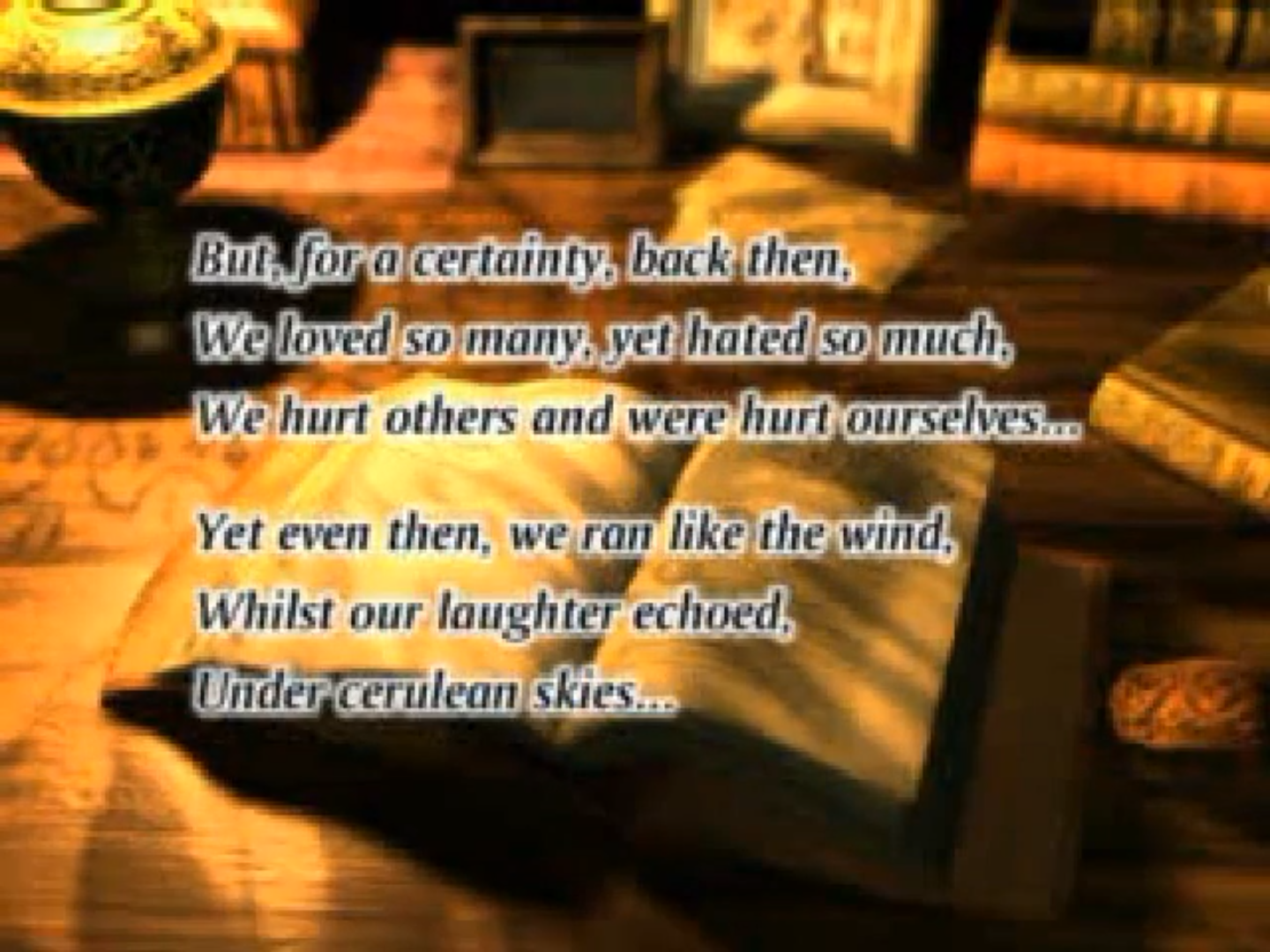
A couple of years ago, I randomly stumbled upon a clip from the Chrono Cross opening. It was incredibly short and only showed the second screen of text but, for some reason, the words coupled with the visuals and music left a striking impression on me, nostalgic yet peaceful, and kept popping back into my mind every now and then.
Said impression only grew stronger when I finally decided to watch the opening in its entirety: it is masterfully executed, conveying both strong feelings and the presence of great narrative complexity just below the surface of a beautifully peculiar world. I made a mental note to come back and play it when the time was ripe, which turned out to be roughly when I started writing this essay.
I set out with maybe too great expectations for a game neither as popular nor praised as its predecessor but, in reality, while Chrono Trigger is an overall enjoyable experience sprinkled with occasional moments when the pacing is a bit too slow, Chrono Cross is an extremely boring and nonsensical game, in which large chunks of its overly complex story are dropped casually onto the unexpecting players’ heads. Audiovisually, it is striking and very evocative, but it fails completely in almost every other respect.
Nevertheless, even after having waded through the slog for countless hours, hoping that, by the end of it all, the journey would have proven worth tackling and failing to see materialized the grand experience I was promised, I find that re-visiting the opening still brings about the same sensations as the first time. Even though I now know everything about that complex story that lurked below the surface and found it inane, I still speculate about what the short flashing clips I am presented with might be about and what their ultimate meaning might be.
I get the distinctive feeling that Chrono Cross is really just a fan-made game, like the one I or anyone else might have made in the hope of pinning down and concretizing in video game form the sirens’ song embedded in the opening cutscene. It makes me wonder about how weak the video game medium truly is: now that it has become a colossal worldwide industry that churns unspeakable amounts of money, how fragile, still, is its ability to connect to the human sensibility compared to older media.
VIII. Sehnsucht
As the attentive reader might have noticed by now, the fragmented memories I reported have not been chosen at random. In recalling these episodes, I perceive a twofold nostalgia: the first being the usual one for the newer and more mysterious world we experience as children and the second being a remembered Sehnsucht, a sensation that games are something marvellous that I could actually get to know and experience, but of which I am just able to see vague hints through a crack in the wall.
These early experiences set me on a path in search of the great games that my imagination promised me and, as I grew older and played more and more titles, I found most of them to be lacking and boring, mere toys devoid of depth, and I felt there must be more to them, that the revelations I had caught a glimpse of must exist somewhere, if not in existing games, in the potential ones that I and other people in the future could and would create.
I realize now that, to a degree, the great love and interest I bear for video games is only possible in their absence, in a culture that dreams of and talks about them as if they can always be found just around the corner, but somehow always out of reach. I long for these video games that everyone speaks about in such enthusiastic terms, but that I will never be able to see for myself.
I revel in the dream of video games: let me sit quietly under its shade and rest for a minute; my eyes fixated on the blue sky, searching in its clouds the things that may yet be.